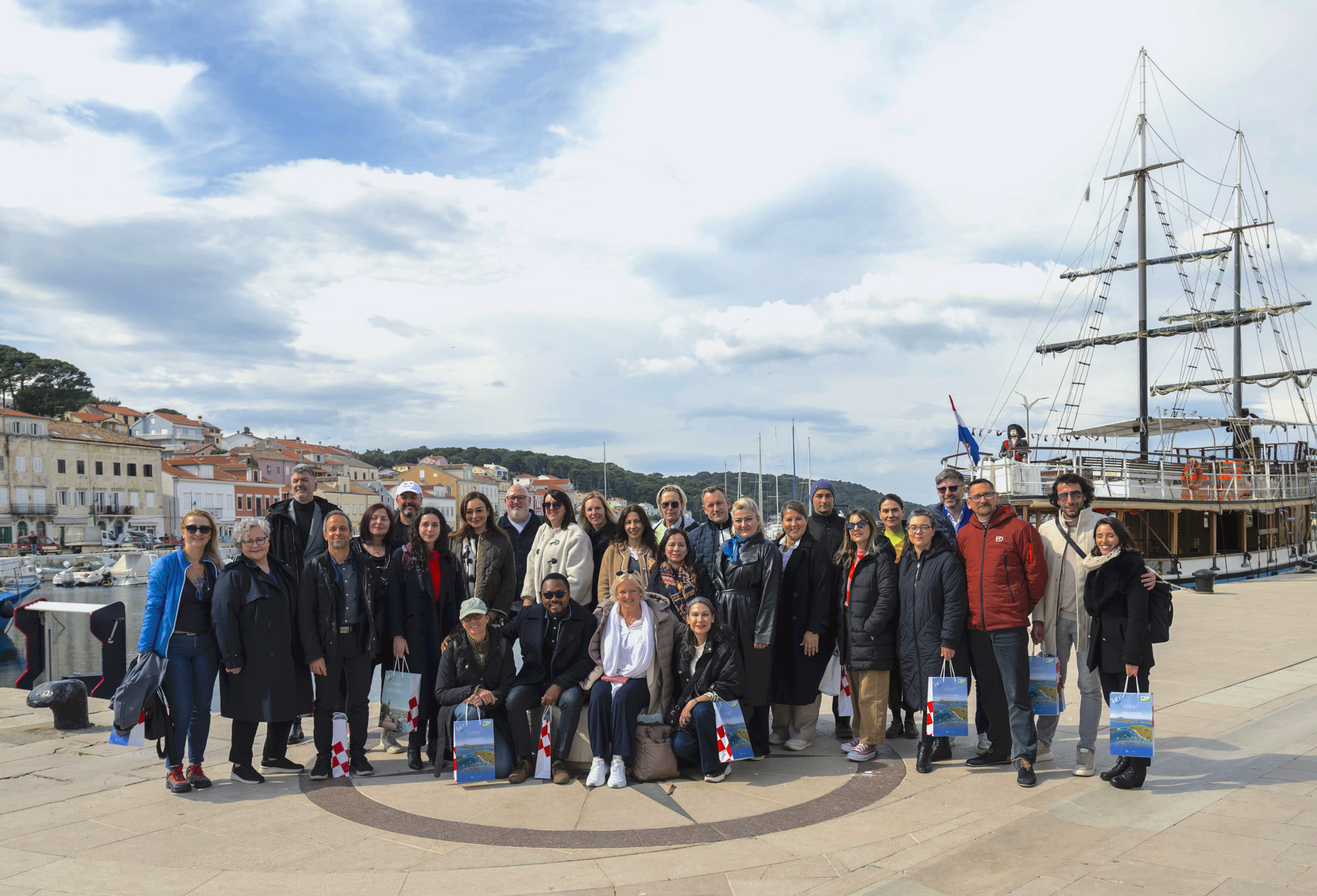
Strategic policy and programmes to develop a region’s culinary identity and strengthen collaboration between tourism, agriculture and education was the subject of the 31st World Regions of Gastronomy Platform Meeting, held from 16–20 March 2026. The meeting was organised by the International Institute of Gastronomy, Culture, Arts and Tourism (IGCAT) together with hosts Kvarner Region Tourist Board, delivering a spectacular Platform meeting on behalf of stakeholders from Kvarner, European Region of Gastronomy 2026. The event brought together regional representatives, international experts and stakeholders committed to advancing sustainable food systems, cultural heritage and community well-being through gastronomy.
The meeting welcomed delegates from more than thirteen regions participating in the World Regions of Gastronomy Platform, including awarded European regions such as South Aegean (2019), Slovenia (2021), Menorca (2022), Saimaa (2024), Crete and Gozo (2026), and Nordland (2028). Awarded World regions like Catalonia (2025) and Manabí (2026) were also represented. Candidate European regions including Dobrogea (2029) and North-East England (2029), as well as the candidate World region Şanlıurfa (2029), joined the exchange.
Across four days, participants explored how gastronomy can strengthen communities, celebrate heritage, and inspire sustainable tourism through a rich programme of site visits, conversations, workshops and cultural encounters across the Kvarner region.
Day 1: Welcome to Kvarner’s Living Heritage
The Platform Meeting opened near Rijeka with an official welcome at the UNESCO-listed Kuća Halubajskega zvončara (House of the Halubje Bell Ringers) in Viškovo. This innovative interpretative centre blends ethnography, culture, education, and technology to celebrate the annual bell ringers’ carnival procession.
The evening continued with a Welcome Dinner at Restaurant Stancija Kovačići, where Chef Vinko Frlan presented a menu celebrating seasonal, local ingredients inspired by carnival dishes traditionally served to the bell ringers. Local and regional leaders welcomed delegates, highlighting how cultural heritage and gastronomy shape Kvarner’s identity.
Day 2: Island Flavours and Community Collaboration
The second day took participants across several islands of the Kvarner archipelago.
Following a visit to a local farmers’ market and the fresh fish market in Rijeka, delegates travelled to the island of Krk to explore regional branding and storytelling at the Katunar Estate Winery. The visit highlighted the importance of indigenous grape varieties such as Žlahtina, and the role of producers in promoting regional identity such as Kvarner Wines Association’s collaborative work.
Participants also enjoyed local products such as Krk Magriž cheese, known for its aromatic, herb-infused flavour reflecting the island’s rugged pastures, and Krčki pršut, a traditional dry-cured ham air-dried by the Adriatic bura wind, offering a delicate, refined taste.
On the island of Cres, the group visited the Agricultural Cooperative Cres, where local producers presented olive oil, sheep cheeses from, the rare Cres sage honey and traditional pastries. The visit continued at the beautifully restored Renaissance-Baroque Palača Moise (Moise Palace) in Cres’s historic centre, now a cultural and educational venue operated by the University of Rijeka. Presentations showcased innovative initiatives like the Remote University model, which expands educational access; the youth-led “Project for Ferry”, addressing transportation needs through community-driven solutions; and the RUTA Association, which held a hands-on wool workshop to revive traditional skills, creating sustainable handcrafted gifts that preserve cultural heritage and strengthen local economic resilience.
IGCAT Regional representatives, Vasia Papailia (South Aegean 2019) and Eirini Makedona Pagkopoulou (Crete 2026) led a dynamic workshop on communicating the World and European Region of Gastronomy title. Participants crafted tailored key messages for sectors including agriculture, tourism, hospitality, civil society, education, and governance, emphasizing the power of storytelling to enhance regional visibility and collaboration.
The day concluded on the island of Lošinj where delegates were warmly welcomed by Dalibor Cvitković, Director of the Lošinj Tourist Board. The group enjoyed a vibrant performance of the traditional Susak dance by the folk group Manfrina, celebrating island heritage. At Restaurant Za Kantuni, guests savoured a traditional lamb meal prepared by Chef Miro Biondić. The event concluded with a symbolic ceremony in which IGCAT’s President and the Tourist Board Director broke the Lošinj krokant, an almond brittle symbolizing prosperity. The evening brought together key stakeholders from the region’s tourism and cultural sectors, underscoring Lošinj’s rich traditions and community spirit.
Day 3: Collaboration, Heritage and Knowledge Sharing
The third day began at the Museum of Apoxyomenos, where Mayor Ana Kučić and Dalibor Cvitković welcomed the delegates. Museum director Zrinka Ettinger Starčić introduced the bronze statue of Apoxyomenos, a 380-kg ancient athlete recovered from Lošinj’s waters and preserved for over 2,000 years. This visit highlighted Lošinj’s rich maritime heritage, where ancient trade routes, local ingredients, and island traditions have intertwined for millennia.
Participants enjoyed a local Merenda, a light meal celebrating Kvarner’s culinary culture with seasonal soup and fresh seafood, showcasing the Adriatic’s bounty, at Deveron Pub.
In the scenic Vinodol Valley, guests visited Vinska kuća Pavlomir known as the Valley of Wine. Owners and winemakers Miroslav and Maja Palinkaš shared the story behind Pavlomir’s distinctive local wines, including the indigenous Žlahtina grape and carefully crafted reds expressing the region’s unique terroir. The evening featured a themed dinner inspired by the traditional cuisine of the Kvarner hinterland, enriched by lively Klapa music.
Key stakeholders included Dr.sc. Irena Peršić-Živadinov, director of Kvarner Region Tourist Board; Alenka Spoja, Vinodol Tourist Board director; Ivona Tatalović, Novi Vinodol Tourist Board; and Katarina Marina, member of the Vinodol Tourist Board, underscoring strong regional collaboration for sustainable tourism and cultural heritage preservation.
Day 4: Diversity of Landscapes, Food Traditions and Well-being
On the fourth day, participants travelled to the Mediterranean garden of Dida Restaurant in Crikvenica with a themed Springtime and Easter breakfast. Guests were introduced to The Oil Fish Route of Crikvenica, an innovative educational memory game created by Marijana Biondić, Crikvenica Tourist Board Director. Featuring stunning illustrations by academic painter Marijan Mavrić, the award-winning game recently won the 2025 World Food Gift Challenge for Best Educational Gift, celebrating the city’s rich fishing traditions.
In Gorski Kotar, the Platform visited the Center for Agriculture and Rural Development at Stara Sušica Castle. The center supports over 150 small producers by providing equipment and expertise. Presentations by Dalibor Šoštarić and Tea Cimaš highlighted its fruit processing plant and the range of sustainably sourced mountain specialties, including wild berries, forest honey, artisanal cheeses, herbal teas, syrups, and cured meats. An eco-market organized by the local association showcased how traditional knowledge and responsible harvesting preserve food heritage and support rural livelihoods. Blažica Sveticki, President of Fruits of the Gorski Kotar Mountains Association, shared insights on community initiatives and themed events celebrating local produce that attract food tourism.
A themed lunch, From Rivers to Forests, was served at Hotel and Restaurant Bitoraj in Fužine, featuring authentic mountain cuisine with locally sourced dishes. Mayors from Ravna Gora, Fužine, and Vrbovsko joined, underscoring regional support for rural development.
The afternoon focused on health, well-being, and gastronomy in Opatija, the Adriatic’s “Pearl.” A guided walking tour highlighted Opatija’s 180-year history as a wellness destination and its influence on contemporary regional food culture. At Villa Angiolina, Dr. Dora Smolčić Jurdana presented the Kvarner Gastronomy Action Plan and Manifesto, outlining a vision for a sustainable regional food culture. Certified heritage interpreter Irina Ban introduced the Gastronomy Vertical Ladder, illustrating Kvarner’s diverse culinary levels, from coastal seafood and olive oil to mountain game and artisan cheeses.
The day concluded with an IGCAT “Lessons Learned” session led by Dr. Diane Dodd, IGCAT President, reflecting on key insights and exploring strategies to engage youth in the primary sector, an essential focus for the upcoming 2nd World Gastronomy Summit in Manabí. Delegates also looked ahead to the next Platform meeting in Crete, discussing ways to boost cross-regional collaboration through partnerships and applied research to advance sustainable gastronomy.
The evening wrapped up with the announcement of the Top 10 Foodie Websites, followed by the Platform Gala Dinner at Amadria Park Hotel Milenij.
The 31st World Regions of Gastronomy Platform Meeting reaffirmed the importance of international cooperation and immersive learning exchanges in shaping sustainable food futures. Through visits to farms, wineries, cultural institutions and community initiatives, Kvarner demonstrated how gastronomy can connect landscapes, heritage and people while supporting economic resilience and well-being.
About the World & European Region of Gastronomy Award
The International Institute of Gastronomy, Culture, Arts and Tourism (IGCAT) is the operative institute that oversees the management and coordination of the World Region of Gastronomy Award and European Region of Gastronomy Award. IGCAT believes that cross-sectoral collaboration will help regions find solutions to current day challenges and thus, the Award is not only given because a region has great gastronomy but because the whole region is working together to create a more sustainable food future. IGCAT encourages not only hospitality industries to participate but everyone across the whole eco-system including public, private, NGO and academic institutions.
The first step in applying for the Award is to bring these different entities together. The next stage is to create a bid book that pulls together as many great initiatives as possible so that people within the region themselves can begin to appreciate how rich their resources are. The third stage is a jury visit that concludes with a recommendation for IGCAT Board and a report to help the region in preparing a successful journey.
Candidate and awarded Regions of Gastronomy, guided by IGCAT, are working together to strengthen food security through the celebration of distinctive food cultures; create employment by stimulating creativity and gastronomic innovation; nourish children and adults through culinary and cultural education; drive environmental sustainability in tourism, hospitality and agricultural sectors; support balance and sustainable tourism practices; highlight and support expertise from within rural and urban communities, creating connections and sharing good practises; and ultimately they contribute to community health and well-being.
23 March 2026

