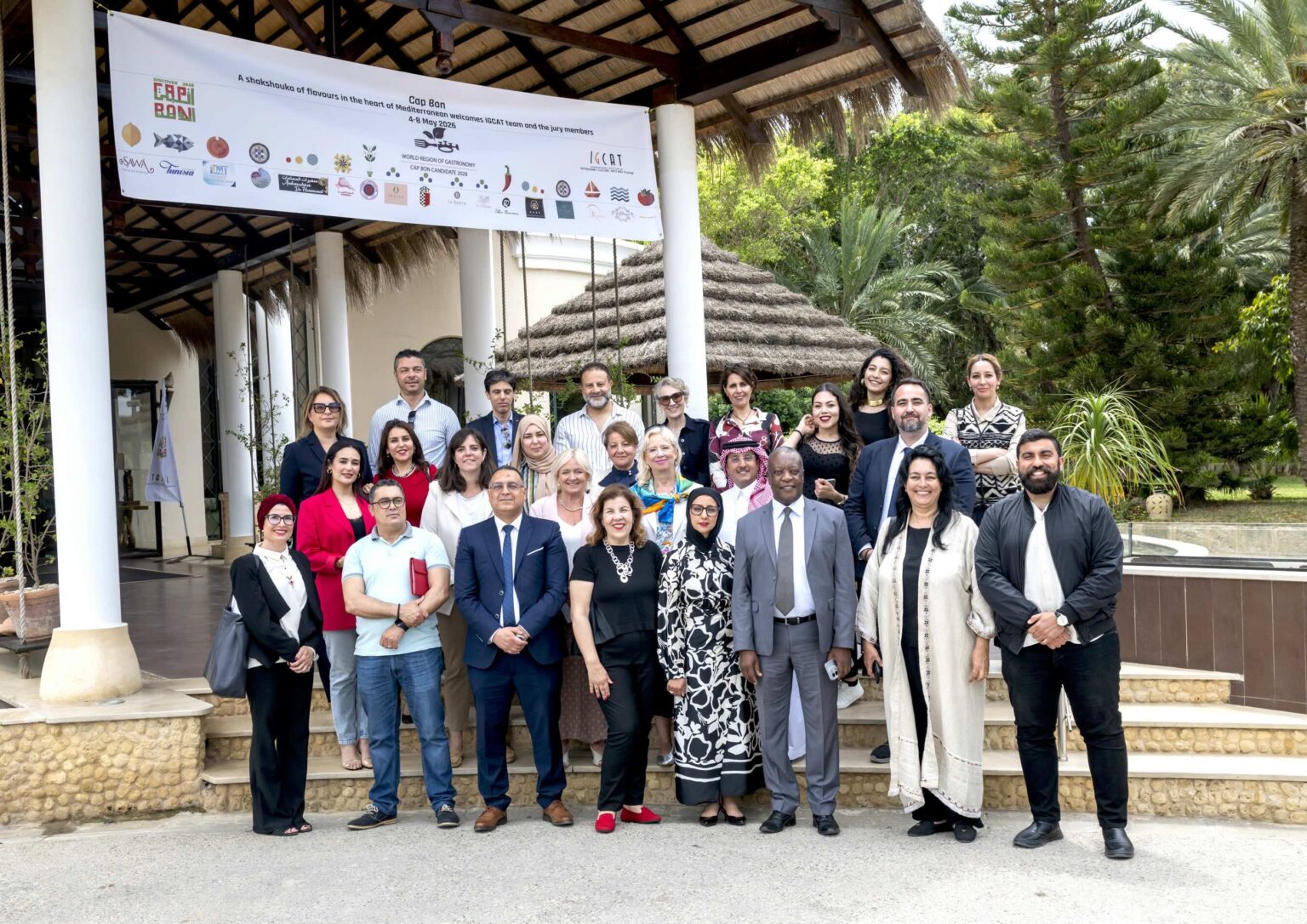
An international jury composed of four international experts accompanied by IGCAT’s President, Diane Dodd PhD, considered the application of Cap Bon region for the title World Region of Gastronomy 2028. After reviewing the bid book: A Shakshouka of Flavours in the Heart of the Mediterranean, submitted on 9 December 2025, they took part in a jury visit to the region from 4-8 May 2026. The aim of the visit was to assess the region’s appropriateness and readiness to host the title in 2028 and to prepare a comprehensive report to be sent to the stakeholders within two weeks.
During this week, the jury engaged with more than 90 stakeholders who are committed in supporting the longer-term vision for Cap Bon to be known as a Mediterranean destination for gastronomy, sustainability and cultural exchange.
The jury’s task is not over after today, they will prepare a comprehensive report with recommendations to support Cap Bon’s continued development and international positioning.
General comments
Dr. Diane Dodd, IGCAT President, congratulated Cap Bon’s World Region of Gastronomy 2028 Consortium and all the regional stakeholders for their exceptional hospitality and for presenting a candidacy deeply rooted in Mediterranean and MENA identity, agricultural richness and living traditions.
“This Award is about cross-sectoral collaboration locally, nationally and internationally. IGCAT firmly believes that by linking culture, environment, health, tourism, agrifood and innovation we can support better eating habits, and a healthier living for us and the planet. Your food and cultural diversity is your “unique selling point” and by safeguarding and promoting it you create job opportunities and increase the circular economy. Working together we can make a brighter future for the next generations.”
Dr. Dodd invited the jury to share their impressions, starting with Dr. Edith Szivas, reporting on Innovation, Creativity, Tourism and Job Opportunities:
- Commended the Regional Commissariat for Tourism of Nabeul- Hamamet for its efforts in developing and promoting tourism in the region;
- The integration of heritage sites such as the archaeological site of Kerkouane, where history, gastronomy and storytelling merge to create a distinctive cultural tourism offer. Particularly noteworthy is their cross-sectoral collaboration with the Institut de Formation dans les Metiers du Tourisme de Nabeul (IFMT) in reviving ancient baking practices;
- Hands-on culinary experiences such as the Kaak Kelibia workshop in Htouba organised by Sawa Taste of Tunisia, where visitors can directly engage with traditional knowledge and practices;
- Particularly impressive was the dynamic startup ecosystem of Hammamet Valley Hub and initiatives such as 1Kub – which demonstrate strong potential for job creation and the development of new business models in agrifood, tourism and digital services;
- In addition, Dar L´Harissa showcased innovative food products and engaging visitor experiences;
- The collaboration between creative institutions such as the Institut Superieur des Beaux-Arts de Nabeul (ISBAN) and local stakeholders translates the identity and landscapes of Cap Bon into artistic and design expressions that enrich the region’s cultural narrative;
- The integration of gastronomy into cultural spaces such as the Medina of Hammamet and the Dar Sebastien International Cultural Center of Hammamet reinforces Cap Bon as a year-round destination where food, art and heritage intersect.
At this point, Dr. Szivas passed the floor to Dr. Mohammed Hammoud, who focused his attention on Environment, Agriculture and Sustainability:
- The visit highlighted Cap Bon’s strong vision for linking gastronomy, heritage, sustainability, and regional development. Through the presentation of PAMPAT, the region demonstrated how local products, traditional knowledge, and craftsmanship can support cultural preservation and strengthen regional identity. The recognition of Harissa as UNESCO Intangible Cultural Heritage was presented as a notable example of how gastronomy reflects collective memory, culture, and local traditions.
- Several field visits further reinforced this approach. The olive oil tasting experience beneath a 2,500-year-old olive tree symbolized the continuity between ancient agricultural heritage and present-day local production, emphasizing the deep relationship between landscape, identity, and food culture.
- The visit also highlighted the ecological importance of the Korba lagoon and its biodiversity, alongside the inspiring work carried out by the Tunisian Association for the Protection of Nature and Environment of Korba (ATPNE). Through its various initiatives, the association demonstrated a strong commitment to environmental protection, climate resilience, environmental education, community engagement, and the promotion of sustainable local development connected to the region’s natural and cultural heritage.
- In addition, the region demonstrated growing awareness of sustainable development through organic farming initiatives and eco-tourism experiences such as Taste of Takelsa. Together, these examples reflected Cap Bon’s broader vision for World Region of Gastronomy 2028 through sustainable gastronomy tourism, innovation, stakeholder collaboration, sensory visitor experiences, and stronger connections between local producers, heritage, environment, and community development.
Then, Laura Ruana Pavon, reported on Citizen Involvement, Education and Community Empowerment:
- At the Sectoral Agricultural Vocational Training High School of Bouchrik, the Jury explored a cutting-edge institution training the next generation of agricultural professionals in citrus cultivation, olive oil production, viticulture, and aromatic herbs. A strong practical approach, with 75% of learning based on hands-on activities, facilitating labour market integration, as well as the flexible programmes adapted to different student needs. The visit also highlighted the institution’s commitment to sustainability, particularly through organic agriculture modules, and its international outlook through exchange programmes that foster skills development and knowledge transfer.
- The Institut de Formation aux Métiers du Tourisme (IFMT) stands out for its high-quality vocational training in tourism and gastronomy, closely linked to sustainability and regional identity. The visit highlighted the institute’s strong collaboration and exchange with national and international organisations, supporting knowledge transfer and the Cap Bon World Region of Gastronomy 2028 candidature. In this context, the institute has already implemented several sustainability initiatives, including the cultivation of an organic garden within the school facilities. The Jury was warmly welcomed with traditional dishes and pastries prepared by the students and with a small fair featuring local craftspeople organised by IFMT, illustrating its strong collaborative approach.
- The involvement of local associations such as the Ambassadrices de Hammamet highlighted the role of women in preserving and transmitting culinary heritage, craftsmanship, and hospitality. The Jury had the opportunity to share a complete experience with them, beginning with a hands-on workshop dedicated to the preparation of traditional regional pastries, followed by a lunch featuring a wide variety of emblematic dishes from the Cap Bon culinary heritage, entirely prepared by the Ambassadrices themselves. During the lunch, we also received feedback and reflections stemming from previous roundtables that brought together chefs, producers, tourism operators, and representatives of civil society, highlighting the importance of collaboration and joint initiatives among the various stakeholders involved in promoting local gastronomy and sustainable tourism.
Finally, Ufuk Keşoğlu reported on Visibility, Communication, Marketing, Legacy and Evaluation:
- The Jury was deeply impressed by the historical research and storytelling of the Cultural Centre in Soliman, which brought the Andalusian influence on Cap Bon to life. It showed how cultural memory, local knowledge and identity can become a powerful part of the region’s wider narrative.
- The work of the students from ISBAN, IHEC and INAT was also one of the most inspiring moments of the visit. Guided by their teachers, they presented remarkable projects, from logos and sustainable packaging to food routes, branding concepts and digital innovation. It was particularly moving to see a new generation actively shaping the future identity of Cap Bon with creativity, sensitivity and professionalism.
- The Jury also recognises the valuable contribution of La Chaîne des Rôtisseurs – Bailliage de Tunisie, whose chefs added elegance and international depth to the Domaine Kurubis experience.
Speaking on behalf of the jury, he thanked the spectacular hotels: Oceana Hotel & Spa, showed strong sustainability practices, supported by a clear strategy and careful planning; Domaine Htouba, offered a very impressive castle-guest house experience, with beautiful craft traditions such as brocade weaving for curtain trimmings and strong potential to become a cultural museum experience; La Badira, offered an international-level hotel experience, with elegant architecture, high-quality service and a refined atmosphere; Africa Jade Thalasso, brought a unique atmosphere to the programme, combining nature, wellness and an African-inspired concept on the Cap Bon coastline.
Also, the incredible food served at: Taste of Takelsa, SFBT, La Daurade, L’Aragosta, El Mansourah, CarAmel tazarka, Villa Maamoura, Dar el Gaied El Maamouri, Berberousse restaurant and Domaine Kurubis.
Recommendation
The jury appreciated that the bid:
- integrates the six different focus areas of IGCAT;
- has demonstrated a genuine development process with the active participation of a wide range of stakeholders across the Cap Bon territory;
- includes plans for Cap Bon’s participation in IGCAT joint projects and demonstrates a commitment to the international dimension of this Award;
- presents a long-term vision aimed at creating a lasting legacy for the region;
- shows a strong commitment from regional partners to sustainability, responsible resource management and the promotion of quality local food production;
The Jury acknowledges that Cap Bon’s “Shakshouka of flavours” is not simply a concept, but a living expression of diversity, rooted in agricultural richness, coastal culture and community life.Cap Bon’s gastronomic ecosystem across coastal and rural settings, from vocational and higher education institutions to farms and fisheries, from artisan producers to hospitality and tourism innovators, suggests that the region has strong foundations and the potential to deliver a meaningful and impactful World Region of Gastronomy year and therefore, based on the written application and the visit to the region, the jury decided that Cap Bon should berecommended for the title World Region of Gastronomy 2028.
Next Steps
This recommendation is subject to the submission of Cap Bon’s strategy plan that should build on the vision and strategies outlined in the bid book. It should include clear actions for before, during and as a legacy of the Award year, actionable projects, evaluation criteria (KPIs), a budget and communication plan meeting IGCAT standards.
This recommendation will be formally ratified at the IGCAT Advisory Forum on 10 June 2026, where the region will receive formal notification and a deadline to deliver the plans. The Award ceremony therefore could take place as early as September this year.
Ambassadors
The founding Consortium for this bid has gone above and beyond in building genuine connections in the region and actively promoting Cap Bon’s food diversity. The jury nominated the following founding stakeholders to become Ambassadors for Cap Bon 2028:
- LAMIA TEMIMI – Cofounder and CEO Sawa Taste of Tunisia
- WAHID BEN FRAJ – Regional Tourism Commissioner of Nabeul–Hammamet
- LASSAAD JELIDI – Director Institut de Formation dans les Métiers du Tourisme de Nabeul (IFMT)
- IMEN RABEH – President of the Association Tunisienne de Protection de la Nature et de l’Environnement de Korbal (ATPNE)
- IMEN ISMAIL – President of Ambassadors of Hammamet
Finally, the jury recognised that this candidacy would not have been possible without Lamia Temimi’s deep commitment to IGCAT’s mission as well as the trust and admiration in her from multiple stakeholders in Cap Bon built over many years.
IGCAT President presented a plaque to Lamia Temimi recognising her role as a true IGCAT Ambassador protecting food and cultural diversity in the Cap Bon.
The jury are positive that the journey ahead will further strengthen connections, deepen long-term impact and share Cap Bon’s story with the world.
Jury composition
Dr. Diane Dodd, IGCAT President and Executive Director the World Region of Gastronomy programme, looked at governance and financing capacity.
Dr. Edith M Szivas, Vice-President of IGCAT and internationally known as a leading expert in sustainable tourism, Dr Edith was tasked with looking at Innovation, Creativity, Tourism and Job Opportunities
Dr Mohammed Hammoud, IGCAT Expert and Executive Director of Aseer, World Region of Gastronomy 2024, was tasked with looking at Environment, Agriculture and Sustainability
Laura Ruana Pavon, IGCAT Expert and Co-Director of Catalonia World Region of Gastronomy 2025 was tasked with looking at Citizen Involvement, Education and Community Empowerment
M. Ufuk Keşoğlu, IGCAT Expert and former Chef who, amongst many accolades is currently collaborating with public institutions in Turkiye on food education. Ufuk was tasked with looking at Visibility, Communication, Marketing, Legacy and Evaluation
Accompanied by: Matilde Ferreira, IGCAT International Projects Manager, and Sergio Ruiz, IGCAT Photographer.
Acknowledgements:
On behalf of IGCAT, the Jury extended its heartfelt congratulations and gratitude to all those who have contributed to protecting and promoting the unique food and cultural diversity of this region. Their collective efforts have been instrumental in Cap Bon’s success as a World Region of Gastronomy 2028 candidate. We thank them in the order of the programme:
- Lamia Temimi, CEO & Founder, Sawa Taste of Tunisia
- Ines Ben Messaoud, Sawa Taste of Tunisia
- Wahid Ben Fraj, Commissariat Régional de Tourisme de Nabeul-Hammamet
- Lassaad Jelidi, Director, Institut de Formation dans les Métiers du Tourisme de Nabeul
- Imen Rabeh, President, ATPNE Korba
- Imen Ismail, President, Ambassadrices de Hammamet
- Sadok Mami, Ambassadrices de Hammamet
- Ridha Romdhan, Director, Lycée Agricole Bouchrik
- Chourouk Labiedh, Professor, Lycée Agricole Bouchrik
- Rim Ben Saoud, Owner, Taste of Takelsa
- Aycha Ben Khlifa, Owner, Taste of Takelsa
- Aymen Ben Saoud, Owner, Taste of Takelsa
- Ahlem Marwen, Owner, Taste of Takelsa
- Layla Ben Saoud, Owner, Taste of Takelsa
- Mustapha Ben Mansour, Association Sites et Monuments du Cap Bon
- Ahmed Ghaleb, Association Sites et Monuments du Cap Bon
- Siwar Lassoued, Director, Cultural Center in Soliman
- Olfa Ben Mahmoud, Cultural Center in Soliman
- Hmida, Local Guide
- Hamouda Dallegi, Music Professor, Cultural Center in Soliman
- Zied Ben Ayed, Quality Director, Tunisian Beverage Manufacturing Company (SFBT)
- Slim Hassine, Director of Sales, Tunisian Beverage Manufacturing Company (SFBT)
- Amira Ben Hadj Ali, General Manager, Oceana Hotel & Spa Resort
- Bachir Fatnasi, Executive Travel Agency
- Walid Larousi, Owner, Restaurant “La Daurade”
- Sahar Hadj Hamda, Expert olive oil tasting
- Hafdhi Bach, Owner, Restaurant “La Ragosta”
- Ahmed Dawdi, Municipal President of El Haouaria
- Moez Achour, Inspector of Ancient Monuments, National Heritage Institute
- Karim Ben Nacer, Owner, Restaurant “El Mansourah”
- Amel Ben Jrad, Owner, Caramel Tazarka
- Amine Bou Fayed, Owner, Domaine El Htouba
- Houda Suissi, Artisan, Kaak Kelibia
- Marwa Suissi, Artisan, Kaak Kelibia
- Jamila El Kamel, Owner, Villa Maamoura
- Rihab Ben Attia, Chef, Villa Maamoura
- Jihen Ben Attia, Chef, Villa Maamoura
- Raya Ben Guiza Verniers, Higher Institute of Fine Arts of Nabeul (ISBAN)
- Yosr Skandaji, Higher Institute of Fine Arts of Nabeul (ISBAN)
- Ines Souissi, Nabeul Institute for Tourism Professions Training (IFMT)
- Imen Saidi, Nabeul Institute for Tourism Professions Training (IFMT)
- Cherifa Lakhoua, Carthage High Commercial Studies Institute (IHEC)
- Lamia Chekir Thabet, PAMPAT
- Hana Bahroun, Artisan, Chic & Glamour
- Nawel Lagha, Artisan, Florès
- Maha Mami, Artisan, Poterie Maha Mami
- Myriam Maamouri, Owner, Dar El Gaïd El Maamouri
- Donia Maamouri, Owner, Dar El Gaïd El Maamouri
- Hsouna Romdhani, Dar El Gaïd El Maamouri
- Jamel Romdhani, Chef, Dar El Gaïd El Maamouri
- Mouna Ben Abdeladhim, Sales & Marketing Manager, La Badira Hotel
- Cyrine Messaoud, Quality Manager, La Badira Hotel
- Moez Abessi, Restaurant “Le Barberousse”
- Lotfi Gabsi, General Manager, Hammamet Valley Hub
- Rahma Mabrouk, CEO, Habibty Market
- Omar Bentaleb, CEO, Mycelium Innovations
- Hamdi Issam Eddine, CEO, Bloom Venom
- Emna Jallal, Co-Founder, 1KUB l’Incubateur
- Jamel Ben Romdhan, Co-Founder, 1KUB l’Incubateur
- Mehdi Bhouri, CEO, Water Spirit SA
- Entissar Aissa, ISBAN
- Wajdi Mami, National Guide
- Najib Kasraoui, General Director, International Cultural Centre of Hammamet
- Nabil Asmi, National Guide
- Fadhila Hachlef, Ambassadrices de Hammamet
- Imen Fayedh, Ambassadrices de Hammamet
- Ines Romen, Ambassadrices de Hammamet
- Asma Fayedh, Ambassadrices de Hammamet
- Najwa Fayedh, Ambassadrices de Hammamet
- Monia Mrad, Ambassadrices de Hammamet
- Latifa Becha, Ambassadrices de Hammamet
- Donia Belkayed, Ambassadrices de Hammamet
- Insaf Jdidi, Ambassadrices de Hammamet
- Sabeh Bou Asker, Ambassadrices de Hammamet
- Lamia Sahli, Ambassadrices de Hammamet
- Maha Chok, Ambassadrices de Hammamet
- Nahla Ismail, Ambassadrices de Hammamet
- Najet Ismail, Ambassadrices de Hammamet
- Radhia Jdidi, Ambassadrices de Hammamet
- Radhia Jdidi, Ambassadrices de Hammamet
- Sihem Lakhdher, Ambassadrices de Hammamet
- Asma Jdidi, Ambassadrices de Hammamet
- Leila Karoui, Ambassadrices de Hammamet
- Fouzyya Rommen, Ambassadrices de Hammamet
- Semia Ismail, Ambassadrices de Hammamet
- Ramzi Bouaoun, Ambassadrices de Hammamet
- Zouhair Bouzid, Owner, Hotel Africa Jade
- Hadia Ayari, Director of Sales and Marketing, Hotel Africa Jade
- Rafik Tlatli, Chef, Restaurant Il Gusto
- Basem Brahem, Chef, IFMT
- Mariem Kacem, General Director of Marketing, Kurubis
- Mohamed Benmna, Production and Technical Responsible, Kurubis
- Aziz Arem, Chief Executive Officer, Le Baroque Restaurant
- Issam El Aoud, Manager, Le Baroque Restaurant
- Meher Elyes, Accountant, Le Baroque Restaurant
- Ridha Elyatim, Chef, Le Baroque Restaurant
- Omar Jbeli, Sous-Chef, Le Baroque Restaurant
- Hanen Ben Ismail, INAT
- Hajer Debbabi, INAT
- Nadia Sassi, Mamlaket El Chahd
- Amel Djait, Dar Jbel
About the World Region of Gastronomy Award
The International Institute of Gastronomy, Culture, Arts and Tourism (IGCAT) is the operative institute that oversees the management and coordination of the World and European Region of Gastronomy Award. IGCAT believes that cross-sectoral collaboration will help regions find solutions to current day challenges and thus, the Award is not only given because a region has great gastronomy but because the whole region is working together to create a more sustainable food future. IGCAT encourages not only hospitality industries to participate but everyone across the whole eco-system including public, private, NGO and academic institutions.
The first step in applying for the Award is to bring these different entities together. The next stage is to create a bid book that pulls together as many great initiatives as possible so that people within the region themselves can begin to appreciate how rich their resources are. The third stage is a jury visit that concludes with a recommendation for IGCAT Board and a report to help the region in preparing a successful journey.
Candidate and awarded Regions of Gastronomy, guided by IGCAT, are working together to strengthen food security through the celebration of distinctive food cultures; create employment by stimulating creativity and gastronomic innovation; nourish children and adults through culinary and cultural education; drive environmental sustainability in tourism, hospitality and agricultural sectors; support balance and sustainable tourism practices; highlight and support expertise from within rural and urban communities, creating connections and sharing good practises; and ultimately they contribute to community health and well-being.