In recognition of its outstanding commitment to local gastronomy, cultural heritage, and sustainable, community-driven tourism, Nordland was awarded the prestigious title of European Region of Gastronomy 2028, by the International Institute of Gastronomy, Culture, Art, and Tourism (IGCAT). This distinction highlights the core values IGCAT promotes: fostering collaboration, celebrating culinary and cultural diversity, and encouraging innovation for a more sustainable future.
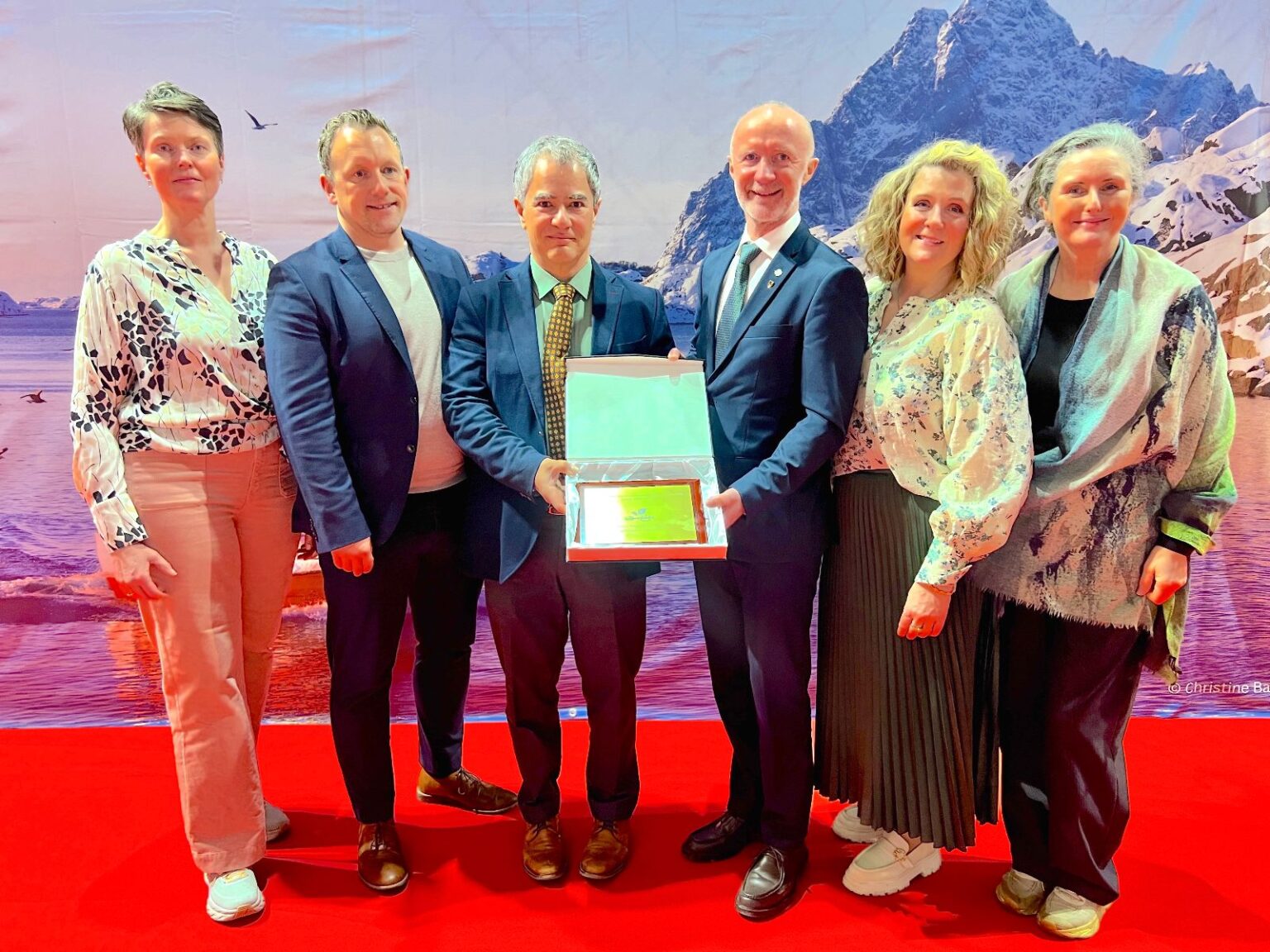
The milestone was celebrated on 14 April 2026 at King Øysteins Hall in Kabelvåg, Lofoten, during the Norwegian Travel Workshop (NTW), Norway’s largest B2B event for the tourism industry. The event brought together political representatives, senior figures from Innovation Norway, destination management companies, and the Northern Norwegian Competence Center for Food. Representing IGCAT, Omar Valdez, Board Member, officially presented the title to Mr. Svein Magnar Øien Eggesvik, Executive for Business Development at Nordland County Council.
Mr. Valdez praised Nordland’s inspiring vision and deep-rooted commitment to sustainable, creative, and community-driven gastronomy, noting: “Nordland’s bid reflects a region with clarity, ambition, and unity. Its unwavering dedication to sustainability, education, and respect for land and sea, supported by remarkable cross-sector collaboration, forms a powerful foundation for a resilient gastronomic future. It stands as a truly deserving candidate for European Region of Gastronomy 2028.”
In his acceptance speech, Mr. Eggesvik highlighted the transformative potential of this recognition, emphasising that the European Region of Gastronomy 2028 title offers Nordland a unique opportunity to strengthen its international profile by developing and promoting local ingredients and food experiences. He noted that this recognition will elevate Northern Norwegian cuisine, support local food producers, and inspire new entrepreneurs in the sector. Additionally, he underscored the initiative’s broader ambition: to motivate young people to pursue education and careers in sustainable agriculture and food sciences, while attracting highly skilled professionals to the region.
Nordland’s culinary identity is deeply rooted in reindeer herding, Sámi traditions, and historic global trade, particularly in stockfish and salmon, which remain central to the region’s cultural fabric. The title underscores Nordland’s four key priorities, aligned with national and regional frameworks for culture, tourism, education, and public health:
- Enhance quality and food-focused experiences in tourism by attracting year-round visitors through sustainable, locally inspired culinary offerings;
- Inspire youth to explore careers in agriculture and food while attracting talent to the region;
- Strengthen Nordland’s global reputation as a food destination by developing and promoting local culinary experiences;
- Celebrate everyday food rooted in local ingredients, fostering collaboration, knowledge-sharing, and inclusion.
The award ceremony also featured a tasting of local ingredients, showcasing Nordland’s commitment to quality, biodiversity, and authentic culinary expression. Chefs, producers, and partners demonstrated the region’s dedication to preserving its gastronomic heritage while embracing innovation.
Nordland is now preparing an ambitious programme leading up to 2028, including gastronomy festivals, conferences, cultural events, and community-based initiatives to present the region’s unique flavours and traditions. With the active involvement of producers, restaurateurs, tourism stakeholders, and cultural organisations, Nordland is poised to proudly represent its distinctive identity as a European Region of Gastronomy.
This award not only recognises Nordland’s current achievements but also lays the foundation for a vibrant and sustainable future rooted in innovation, cooperation, and respect for cultural and culinary heritage, values at the heart of IGCAT’s mission.
Photo credit: Susanne Forsland_Nordland fylkeskommune
About the World/European Regions of Gastronomy
World Regions of Gastronomy, and European Regions of Gastronomy, guided by IGCAT, are working together to strengthen food security through the celebration of distinctive food cultures; create employment by stimulating creativity and gastronomic innovation; nourish children and adults through culinary and cultural education; driving environmental sustainability in tourism, hospitality and agricultural sectors; supporting balance and sustainable tourism practices; highlighting and supporting expertise from within rural and urban communities, creating connections and sharing good practices; and contributing to community health and well-being.
About IGCAT
International Institute of Gastronomy, Culture, Arts and Tourism (IGCAT) aims to empower local communities by raising awareness of the importance of protecting and promoting distinct regional food, culture, arts and natural assets as part of sustainable and balanced tourism and development strategies. This is essential to safeguarding our planet, health, wellness and local economies.
IGCAT is a non-profit institute established in 2012, working with regional stakeholder consortiums in the fields of gastronomy, culture, arts and tourism. It counts on the expertise of a worldwide network of experts and works in partnership with specialised intergovernmental organisations.
IGCAT founded the World/European Region of Gastronomy Award and is the official secretariat for the World Regions of Gastronomy and European Regions of Gastronomy Platforms. Furthermore, the Institute has developed the European Young Chef Award, the World Food Gift Challenge, the Top Foodie Websites and the international Food Film Menu.