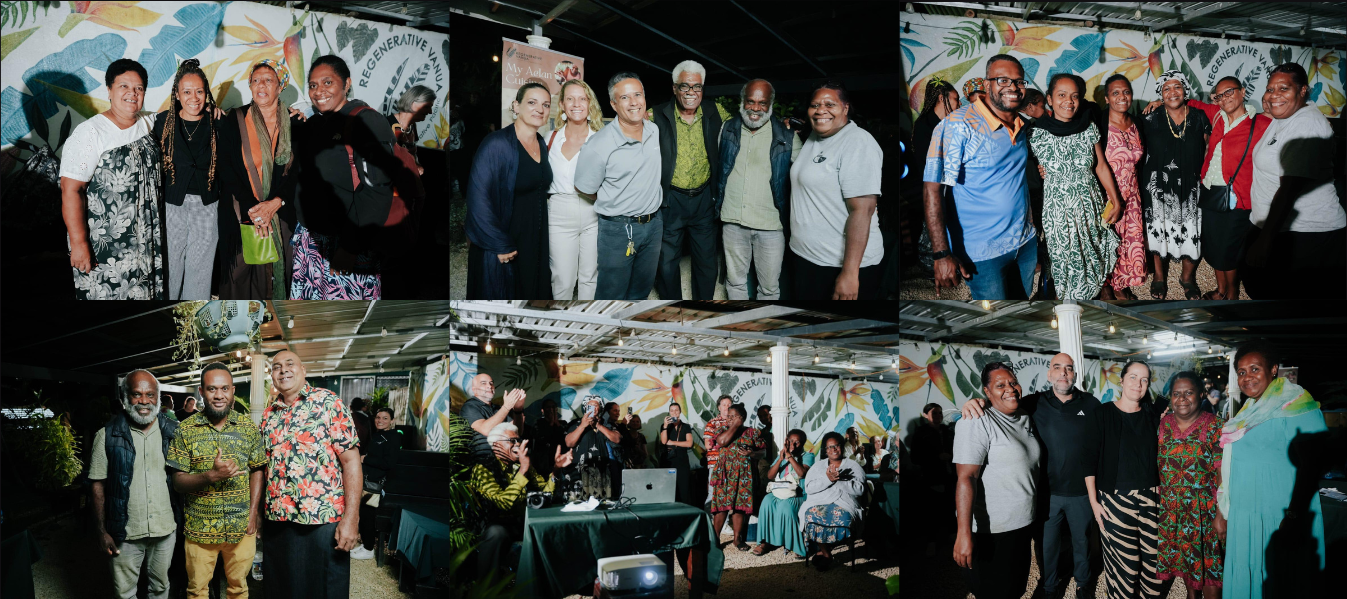
An international jury composed of four Experts accompanied by IGCAT’s President, Diane Dodd PhD, considered the application of Vanuatu region for the title World Region of Gastronomy 2027. After reviewing the bid book: KAKAE VANUATU -Remembering the past, Regenerating the future», submitted on 16 May 2025, they took part in a Jury Evaluation taken place online from 1-5 June 2026, through a series of focused interviews with stakeholders representing government, traditional leadership, culture, education, tourism, agribusiness, certification, hospitality and regenerative development.
During this evaluation, the jury engaged with over 30 organisations and representatives who are committed to supporting a longer-term vision for Vanuatu to be known internationally for regenerative food systems, cultural integrity, biodiversity, island hospitality and gastronomy connected to community wellbeing.
The jury statement was read to a large group of stakeholders and the press conference was opened by Ruth Amos from Regenerative Vanua, who noted Vanuatu’s emerging global leadership in regenerative gastronomy.
Following this press announcement, the jury will prepare a comprehensive report with recommendations to support Vanuatu’s continued development and international positioning.
General comments
Dr. Diane Dodd, President of the International Institute of Gastronomy, Culture, Arts and Tourism (IGCAT), began by introducing the World Region of Gastronomy Award that recognises regions that use gastronomy as a powerful force for regional development, cultural pride, food sovereignty and regenerative transformation.
Dr. Dodd highlighted that Vanuatu captured IGCAT’s attention through the Australian Centre for International Agricultural Research (ACIAR) funded documentary produced by the Australian Broadcasting Corporation (ABC) showcasing the Chair of Regenerative Vanua and Ambassador for Pacific Island Food Revolution, Votausi MacKenzie-Reur‘s campaign for nutritional action and building the pride in Vanuatu’s food culture, and Sanma Food Revolution, which won the Health and Well-Being category at the International Food Film Menu Competition.
Curious to learn more, Dr. Dodd attended the Regenerative Agritourism Symposium in 2024, where a protocol was signed to begin collaborating with Vanuatu on its nomination to become a World Region of Gastronomy.
Vanuatu’s ambitious bid book «KAKAE VANUATU Remembering the past, Regenerating the future» captures the uniqueness of the regions’ food and culture across 83 islands.
Vanuatu Regenerative Agritourism, Gastronomy and Agribusiness Association, which meets monthly provides strong leadership, instilling confidence in the region’s path to success and, the Council of Ministers’ timely decision to finance the project demonstrates political will.
However, Dr. Dodd urged continued support from key ministries, including the Ministries of Agriculture, Livestock, Forestry and Biosecurity; Climate Change; and Foreign Affairs, International Cooperation and External Trade, to formally approve the strategy, action plan and budget for the 25-year plan:
«The 25-year strategy, action plan and governance model presented to us this week, representing public, private, third sector and academic institutions, will ensure that all voices are heard and will benefit from this shared journey, celebrating a regenerative food future. The fact that it has been endorsed by the Vanuatu Malvatumauri Council of Chiefs is a powerful signal that this strategy is built on the wisdom of elders, the legacy of Vanuatu’s culture and a shared commitment to regenerating vanuas, strengthening island food systems, cultural memory, community ownership and regenerative agritourism and gastronomy.”
As a Jury Member, Dr. Dodd focused her attention on Governance and Finance, highlighting key contributors including:
- Regenerative Vanua, which has been doing incredible work for several years in instilling pride, promoting regenerative practices and building community. The initiative centers Vanua as living framework for supporting regenerative food systems, local leadership, intergenerational learning and Indigenous worldviews as essential for persistence and continuity.
- Lapita Café, which is making healthy snacks with local food and creating an alternative to imported global brands. The CEO is leading a campaign to educate the public on the importance of healthy eating.
- Vanuatu Chamber of Commerce, representing 62,000 businesses, is a strong ally in this story. Its commitment to supporting SMEs, addressing financial literacy gaps and incentivising private sector participation will be essential.
And then, shared the impressions of Dr. Edith Szivas, reporting on Innovation, Creativity, Tourism and Job Opportunities:
- Vanuatu Ferry Limited stood out for its important role in connecting islands and remote communities, and the ferry service’s plans to serve local food and beverages making inter-island travel a showcase of Vanuatu’s food culture and supporting local producers was applauded by the jury.
- Turtle Bay Lodge received praise for its deep connection to Santo’s local food culture, natural assets and agricultural traditions. By using organic, locally grown fruits and vegetables, sourcing most seafood from local fishermen, and highlighting Santo beef, the lodge creates authentic village experiences where guests can visit gardens, harvest ingredients and learn to prepare traditional dishes such as simboro. This model exemplifies how regenerative gastronomy can link hospitality with local agriculture, community knowledge and place-based experiences.
- Warwick Le Lagon Resort impressed the Jury with its commitment to local sourcing and its development of hands-on traditional food experiences for guests. Initiatives such as a traditional kitchen facility, locally inspired menus, coconut-based refreshments and potential chocolate-making workshops with local producers demonstrate how resorts can actively contribute to regenerative gastronomy by fostering closer connections between visitors and local food, culture and agriculture.
- Breakas Beach Resort was commended for its use of local produce, engaging guest cooking classes and Melanesian Night events that make Vanuatu’s food culture accessible within a tourism setting. Plans to expand these activities and strengthen partnerships with local producers and student competitions further showcase creativity and innovation in enhancing the visitor experience.
- 83 Islands Distillery was noted for transforming local production into an engaging visitor attraction through tours and tastings. Its plans to connect visitors more directly with sugarcane farms, local ingredients and food stories represent a promising example of linking regenerative gastronomy and regenerative agritourism innovation and increasing the visibility of local agriculture.
- Respond Global’s work in strengthening community resilience, preparedness and support was recognized as a crucial contribution to the broader enabling environment necessary for supporting community wellbeing and long-term resilience. Respond Global are now in discussions to collaborate with Regenerative Vanua in supporting Vanua Led Regenerative Learning Exchanges and Journeys in the remote islands of Vanuatu addressing key access constraints for visitors.
Dr. Szivas concluded: “The Jury recognizes several examples that illustrate how Vanuatu’s regenerative gastronomy vision is increasingly being translated into practice, from inter-island transport and resort experiences to local production, creative visitor experiences, community resilience and visitor dispersal. These examples reflect the wider regenerative vision set out in the bid book, where food, land, culture, community and future generations are closely connected.»
At this point, Dr. Diane Dodd spoke on behalf of Jury Member Dr. Luis Andrade, who focused his attention on Environment, Agriculture and Sustainability:
- The Jury recognized Vanuatu’s exceptional environmental context, where food systems are deeply intertwined with land, ocean, climate resilience, biodiversity and community stewardship. As previously highlighted, the 25-year Regenerative Agritourism and Gastronomy Policy integrates climate, agriculture and food systems across government ministries. The active involvement of the Vanuatu Department of Environment and the Ministry of Climate Change demonstrates the global urgency and relevance of linking regenerative gastronomy with climate adaptation, environmental protection, responsible resource management and education.
- The jury applauded the Regenerative Verification Program that offers a further advantage beyond skills development, mentoring and support. It is an outcomes-based alternative to expensive certification, measuring community-level progress through action plans rather than individual farm compliance. The verification system transforms data into narratives accessible through an app, so that elements such as Torba Province’s breadfruit preservation techniques, practised by specific families, can be made visible and help create regenerative agritourism experiences that validate traditional knowledge holders and inspire new microenterprises.
- The Jury also learned about the Vanuatu Agricultural Research and Training Centre in Santo, which maintains a genetic bank that provides farmers with planting materials and seeds. Additionally, Siloa Slow Food Vanuatu, housed at the Vanuatu Cultural Centre, organizes slow food festivals rotating across islands, sharing resources from an archive of traditional recipes and farming practices.
- Vanuatu’s rich biodiversity is further illustrated by the presence of 23 bee varieties, with honey sales thriving through direct community channels, indicating a promising industry for expansion.
- Other notable environmental and agricultural assets include custom gardens in Maewo, preserving over 70 taro varieties, and water taro gardens listed by the FAO as Globally Important Agricultural Heritage Systems; breadfruit research rooted in Torba Province, where the crop is revered and preserved through traditional techniques; and Vanuatu’s remarkable diversity of kava varieties.
- Vanuatu boasts the highest number of kava varieties in the world, including the greatest concentration of noble varieties. Efforts are underway through the Geneva Act of the Lisbon Agreement, facilitated through the Pacific Islands Forum and the Vanuatu Intellectual Property Office, to protect these varieties and the term “kava” itself, similar to the protection afforded to champagne.
- The Jury also highlighted the success of ACTIV Chocolate, a company leveraging island-based geographical branding, such as their island origin dark chocolate from Epi, Santo, Malo and Malekula winning international awards.
- The Jury also engaged with V-Organic, which collaborates with farms and communities across different islands, including Malo, Vanua Lava and local farms near Port Vila. While most farms in Vanuatu operate organically by default, using traditional grafting, cuttings and protection techniques, they face increasing pressure to adopt monoculture and mechanization for export. The Jury emphasized the importance of resisting this trend, recognizing the critical role of V-Organic and Regenerative Vanua in preserving and enhancing regenerative practices through innovation.
All this evidence suggests that the candidacy is aligned with a regenerative vision that goes beyond sustainability and seeks to restore relationships between people, food, land, culture and future generations. This makes it a candidacy with a strong environmental foundation and a clear opportunity to position Vanuatu as a global reference.
The floor was then handed to Jaume Gomila, who reported on Citizen Involvement, Education and Community Empowerment:
- The Jury highlighted the work of Pacific Australia Skills, which supports a national system linking product and destination development. Its focus on creating clear pathways for young people strengthens the workforce and ensures that training becomes a key driver of growth. Notably, initiatives such as the Vanuatu National Skills Competition introduce a local cuisine category alongside the commercial chef competition, bringing together students from all six provinces.
- The Vanuatu Institute of Technology exemplifies how vocational training can bridge traditional artisanship and modern occupations through highly specialized skills development, positioning itself as a vital partner in preparing future top professionals.
- The National University of Vanuatu serves as a unique platform for research, documentation and specialization, elevating the academic dimension of Vanuatu’s candidacy. Dedicated MA programmes focused on regenerative primary sectors and regenerative tourism underscore this commitment. The university further fosters engagement through monthly open sessions that encourage dialogue, exchange and collaboration, bringing together sector stakeholders and society to address real-world challenges and local aspirations.
- The Vanuatu Cultural Centre emphasizes Indigenous wisdom as a living heritage that continues to shape collective life. Its national archive houses an extensive database of ancestral recipes, regional cooking methods and seasonal practices. This invaluable documentation preserves historical knowledge, explaining why specific animal and plant varieties are prepared in particular ways and revealing the extraordinary culinary diversity across Vanuatu’s 83 islands.
Jaume Gomila concluded: “The Citizen Involvement, Education and Empowerment session confirms the combination of formal, non-formal and, notably, informal education across the archipelago. Evidence indicates that in Vanuatu, food education is a vehicle for boosting the economy, culture, environment and society, from a perspective that leaves no one behind.”
Finally, Ir. Majed AlMuhanna reported on Visibility, Communication, Marketing, Legacy and Evaluation:
- The Jury was impressed by the clarity of Vanuatu’s regenerative narrative by the Communications Manager of Regenerative Vanua. The potential to share this story internationally through food, culture, nature, hospitality and community voices stood out. It was encouraging to learn that the candidacy has already developed a strong digital platform designed to showcase the islands’ stories, stakeholder profiles, educational content, regenerative practices, local products and visitor experiences, all in one accessible place. The regenerative learning exchanges demonstrated how knowledge flows across communities, institutions and generations, building connection and shared understanding that enhances motivation for regenerative stewardship. Through reciprocal, place-based learning that honours Indigenous wisdom and strengthens capacity, these exchanges support local food systems, community leadership and a continuous cycle of regeneration.
- The Pacific Island Food Revolution demonstrated the power of television in promoting healthy, organic and local consumption through engaging cookery competitions. Its work exemplifies how public engagement can transform past challenges into confidence and wellbeing for all.
- The Jury also met with HELPR-1, a crucial support pillar bridging connections between urban hubs and remote islands. HELPR-1 focuses on reviving and sustaining local food systems. Such initiatives empower local producers and SMEs to transport goods to urban centres, supporting a resilient and self-sufficient regional economy.
- The role of Vanuatu Organics Certification through POETCom was recognized as vital for enhancing visibility and credibility. By communicating quality, trust and responsible production, POETCom strengthens confidence among residents, visitors and international partners.
- It was also important to hear from Regenerative Vanua researchers and representatives from Chief Rasa Ure in Maewo, Vunausi in South Santo, and the Sanma Regenerative Agribusiness, Agritourism and Gastronomy Cooperative. Their work in raising citizen awareness, fostering mindset change and building momentum is essential.
- None of these achievements would be possible without the logistical support and leadership of Regenerative Vanua and NGOs such as Helper 1, whose contributions are clearly instrumental.
- Regarding evaluation and monitoring, the National University of Vanuatu and the Regenerative Verification Program are well positioned to support the legacy of the Award. They will help gather evidence, document impact, develop indicators and ensure that the candidacy remains not only inspiring but also measurable.
Finally, Ir. AlMuhanna concluded: “It is vital to recognize that the modern focus on regenerative economies, gastronomy and conscious tourism is not a new invention for Vanuatu. These concepts are deeply rooted in the timeless wisdom of the elders. For centuries, traditional governance, customary resource management and a deep respect for natural cycles have safeguarded the islands’ resilience.”
Recommendation
The jury appreciated that the bid:
- integrates the six different focus areas of IGCAT;
- demonstrates a genuine development process with the active participation of stakeholders across Vanuatu;
- shows a strong commitment to regenerative development, cultural safeguarding, environmental responsibility and community empowerment;
- includes organisations able to contribute to governance, finance, education, tourism, product development, verification, research, communication and evaluation;
- presents a long-term vision aimed at creating a lasting legacy for the islands and their communities;
- demonstrates a commitment to the international dimension of the Award and to the exchange of knowledge within the IGCAT Platform.
Vanuatu’s diverse gastronomic ecosystem — spanning coastal and rural communities, educational institutions, farms, fisheries, artisan producers, and innovative hospitality and tourism sectors — demonstrates strong foundations and significant potential to deliver a meaningful and impactful World Region of Gastronomy year. Therefore, based on the written application and the online Jury evaluation, the Jury decided that Vanuatu should be recommended for the title World Region of Gastronomy 2027.
Next Steps
This recommendation recognises Vanuatu’s emerging global leadership in regenerative gastronomy, anchored in its 25‑year Regenerative Gastronomy and Agritourism Policy. Fully supported by IGCAT and led by the National Regenerative Agritourism and Gastronomy Committee, the policy sets out a long-term vision for authentic, Vanua-led regenerative agritourism and gastronomy—celebrating culture, strengthening local food systems, expanding regenerative farming and increasing the use of locally sourced products nationwide. Central to this is the Regional Pacific Regenerative Verification Initiative, implemented by Regenerative Vanua, with the Government of Vanuatu committing to host the regional office—demonstrating both national leadership and regional responsibility. Strong private sector engagement further reflects a powerful shift from competition to collaboration, with businesses actively co-creating value and contributing to the collective development of Vanuatu’s as the regenerative hub of the Pacific.
The recommendation will be formally ratified at the IGCAT Advisory Forum on 10 June 2026, where Vanuatu will receive official notification, with the Award ceremony potentially taking place as early as September this year.
The Jury is confident that the journey ahead will continue to deepen connections, strengthen regenerative stewardship and amplify Vanuatu’s story as a global model for Vanua-led, culturally informed regeneration.
Mr. Jean-Pierre Nirua, the Vice-Chancellor of the National University of Vanuatu, spoke in response: «We are very proud, pleased and moved. We weren’t expecting a small nation like Vanuatu to be recognised. For a local it means a lot – because it is about our lifestyle that has been classified as no value until this revolution came up and we have been able to revisit our own culture and values, our roots from where we come from. To give this honour to Vanuatu, is not just a victory for Vanuatu, it is for the Pacific and all the island nations.»
Jury composition
Dr. Diane Dodd, IGCAT President and Executive Director of the World Region of Gastronomy programme, assessed governance and financing capacity.
Dr. Edith M. Szivas, Vice-President of IGCAT and internationally recognized as a leading expert in sustainable tourism, was tasked with assessing Innovation, Creativity, Tourism and Job Opportunities.
Dr. Luis Andrade, IGCAT Expert and representative of Manabí, World Region of Gastronomy 2026, was tasked with assessing Environment, Agriculture and Sustainability.
Jaume Gomila, IGCAT Vice-President and Director of Adult Learning Centres of Menorca, focused on Citizen Involvement, Education and Community Empowerment.
Ir. Majed AlMuhanna, IGCAT Expert from the Culinary Arts Commission of the Saudi Ministry of Culture, Jeddah-Taif World Region of Gastronomy 2027, was tasked with assessing Visibility, Communication, Marketing, Legacy and Evaluation.
The Jury was accompanied by Matilde Ferreira, IGCAT International Projects Manager, and Luna Graziottin, IGCAT Partnerships Manager.
Acknowledgements:
On behalf of IGCAT, the Jury extended its heartfelt congratulations and gratitude to all those who have contributed to protecting and promoting the unique food and cultural diversity of this region. Their collective efforts have been instrumental in Vanuatu’s success as a World Region of Gastronomy 2027 candidate.
We thank them in the order of the programme:
- Jerry Spooner, CEO, Regenerative Vanua
- Votausi Mackenzie, Owner/General Manager, Lapita Café
- Leila Jacobé, Chair, Vanuatu Regenerative Agritourism, Gastronomy and Agribusiness Association
- Antoine Bourdier, President, Vanuatu Chamber of Commerce
- Wade Evans, Principal, Vanuatu Institute of Technology
- Kahana Andrew, Operations Manager, Regenerative Vanua
- Nicholas Venables, Country Director, Pacific Australia Skills
- Kevin Tabi, Senior Skills Advisor, Pacific Australia Skills
- Anne-Sophie Vivier, Director, National University of Vanuatu
- Richard Shing, Director, Vanuatu Cultural Center (Slow Food)
- Morris Kaloran, Advisor, Regenerative Vanua
- Maukeha Sham Koa, Director, Vanuatu Ferry Limited & Noa Noa Limited
- Angie Warren, Manager, Turtle Bay Lodge, Santo
- Ramzy Shibany, Manager, Warwick Le Lagon Resort
- Lucie Verut, Manager, 83 Islands Distilleries
- Vashti Morin, General Manager, Breakas Beach Resort
- Paolo Zanella, Manager, Breakas Beach Resort
- Lynette Kalfau, Chef, Regenerative Vanua
- Rowan Lulu, Operations Support & Logistics Manager, Respond Global
- Michel Raikatalau, Owner, V-Organic
- Dr. Cherise Addinsall, Director, Regenerative Verification Program
- Alain Jacobé, Vice Chairman, Vanuatu Organics Certification (POETCOM)
- Charlie Lengtehi, Chairman, Sanma Regenerative Agribusiness, Agritourism & Gastronomy Cooperative
- Yannick Taga, Owner, K2 Café Catering
- Dr. Basil Leodoro, Director, Helper1
- Ruth Amos, National Coordinator, Regenerative Vanua
- Ellison Reveala, Rasa Ure, Maewo
- Rosinta Boe, Researcher, Regenerative Vanua, Maewo
- Nickolyne Masingeur, Researcher, Regenerative Vanua, Vunausi, South Santo
- Martin Lui, Researcher, Regenerative Vanua, Maewo
- Eva Addinsall, Communications Manager, Regenerative Vanua
- Noah Kouback, Director General, Ministry of Foreign Affairs, International Cooperation and External Trade, Port Vila
- Ralph Regenvanu, Minister, Ministry of Climate Change
- Osbourne Melenamu, Director, Vanuatu Department of Environment
- Chief Paul Robert Ravun, President, Malvatumauri National Council of Chiefs in Vanuatu
- Mr. Jean-Pierre Nirua, Vice-Chancellor of the National University of Vanuatu
About the World Region of Gastronomy Award
The International Institute of Gastronomy, Culture, Arts and Tourism (IGCAT) is the operative institute that oversees the management and coordination of the World and European Region of Gastronomy Award. IGCAT believes that cross-sectoral collaboration will help regions find solutions to current day challenges and thus, the Award is not only given because a region has great gastronomy but because the whole region is working together to create a more sustainable food future. IGCAT encourages not only hospitality industries to participate but everyone across the whole eco-system including public, private, NGO and academic institutions.
The first step in applying for the Award is to bring these different entities together. The next stage is to create a bid book that pulls together as many great initiatives as possible so that people within the region themselves can begin to appreciate how rich their resources are. The third stage is a jury visit that concludes with a recommendation for IGCAT Board and a report to help the region in preparing a successful journey.
Candidate and awarded Regions of Gastronomy, guided by IGCAT, are working together to strengthen food security through the celebration of distinctive food cultures; create employment by stimulating creativity and gastronomic innovation; nourish children and adults through culinary and cultural education; drive environmental sustainability in tourism, hospitality and agricultural sectors; support balance and sustainable tourism practices; highlight and support expertise from within rural and urban communities, creating connections and sharing good practises; and ultimately they contribute to community health and well-being.