The UNCCD G20 Global Land Initiative’s July Generation Restoration Dialogue turned on the hardest question in land restoration: not whether it works, but who will close a funding gap of more than USD 250 billion a year.
Ask why the world is losing its healthy land, and the answer usually involves drought, farming or a changing climate. Ask who will pay to bring it back, and the conversation gets harder. That harder question was the focus of the July Generation Restoration Dialogue, the UNCCD G20 Global Land Initiative’s monthly online series, which this month turned to the money behind restoration.
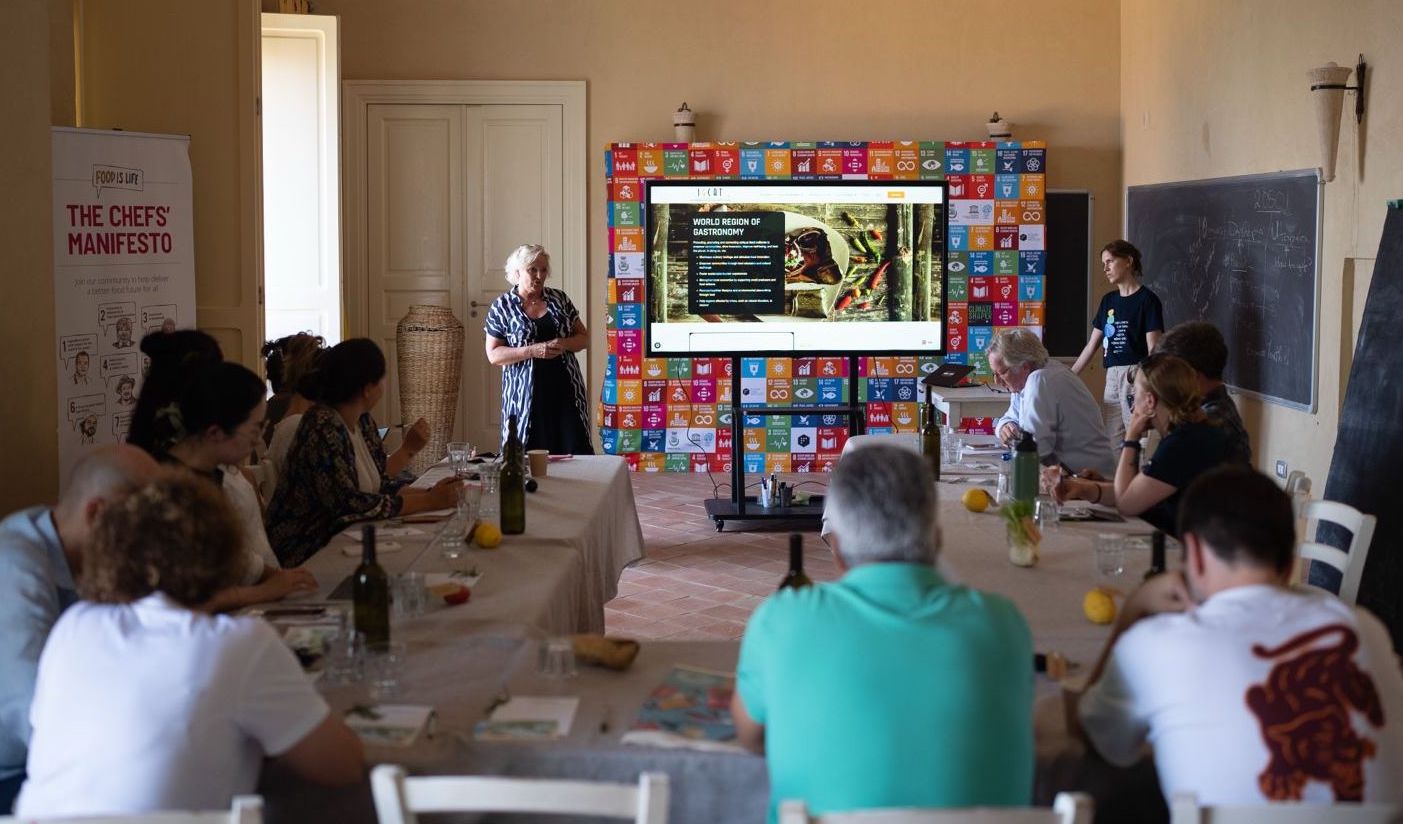
For anyone who works with food, the link is direct, which is why Shirinda P Pulluru joined the session on behalf of The International Institute of Gastronomy, Culture, Arts and Tourism (IGCAT). A region’s cuisine grows out of its soil, its water and its climate. As land degrades, the produce, the farmers and the traditions that rest on it are all put at risk. Restoring land is protecting the future of what we eat.
The case for doing it is strong. Every dollar invested in managing land well returns between 7 and 30 dollars in value, through healthier soil, cleaner water and steadier harvests. The hard part is raising the money in the first place. Restoring the world’s degraded land would cost around USD 1 billion a day. Today the world spends only USD 70 to 80 billion a year on it, leaving a shortfall of more than USD 250 billion every year. The moderator, Sabrina Debrard of the G20 Global Land Initiative, called the gap an ecological and human problem as much as a financial one, and, she hoped, a solvable one.
Louise Baker, who leads the Global Mechanism at the UN Convention to Combat Desertification (UNCCD) and spends her days helping governments find money for restoration, was clear that public budgets alone will never be enough. Countries have promised to restore more than a billion hectares of land, yet almost all the funding still comes from national treasuries. “Even if we took all of the climate finance,” she said, “we still wouldn’t have enough.”
The deeper problem, she argued, is that the system pays people to damage land rather than heal it. Farmers and companies are pushed to produce more food, more cheaply, and the land pays the price. Her example came straight from the supermarket shelf: “Christmas strawberries in Europe means somewhere where it’s sunny is using their water to grow strawberries to export them to you,” a hidden cost that never appears on the receipt. Her quickest remedy is to stop paying for the harm. Redirecting the public money that today rewards damaging practices, she said, “would close the financing gap almost immediately.”
If Baker sees the problem from the top, Pénélope Choussat sees it from the ground. A landscape finance specialist at the restoration organisation Commonland, she works alongside communities across Africa and Southeast Asia. The real obstacle, she said, is a “plumbing problem”: the money exists, but it arrives in enormous amounts, while the people doing the restoration need it in small ones, and the pipes to connect the two have never been built. Commonland works instead at the scale of a whole landscape and toward four returns: financial, social, natural, and what she calls a return of inspiration, the belief that a community can shape the land where it lives.
Choussat also named a trap that catches many local groups. The “private capital” everyone talks about is money that expects a profit, and most community associations and NGOs, by their nature, do not make one. What they need is patient funding for the slow work of restoration, not another short grant tied to a single project. Co-host Theresa Rose Sebastian of the youth-led Re-Earth Initiative kept the audience’s questions focused on these groups: the grassroots organisations and young people who do much of the work and are too rarely counted as partners.
There was room for optimism, in new funds that reward preventing damage rather than repairing it, and insurance built to back farmers who care for their land. Baker was also blunt with the practitioners watching. Most of the funding proposals she sees, she admitted, would not convince her to put her own money in. Her advice was practical: bring evidence, know your numbers, and look at your project the way an investor would. Finance will be a headline theme at the UN’s COP17 desertification summit in Ulaanbaatar, Mongolia, where a full day is given to it on 24 August.
For IGCAT and the World Regions of Gastronomy Platform, the connection is practical. A region’s food begins with its land, and paying to restore that land is part of protecting the food cultures that grow from it. The discussion kept returning to the same people: the farmers and local groups who live on the land and will decide whether the money ever reaches it.
“Gastronomy begins with the land. Unless we find the means to restore our soils, water and ecosystems, we cannot safeguard the regional food cultures that give communities their identity and their future,” said Dr Diane Dodd, President of IGCAT.
The full session, “Billion-Dollar Questions: Financing Land Restoration” (14 July 2026), is available on the G20 Global Land Initiative’s YouTube channel.